注釈
こんにちは、SunFounderのRaspberry Pi & Arduino & ESP32愛好家コミュニティへようこそ!Facebook上でRaspberry Pi、Arduino、ESP32についてもっと深く掘り下げ、他の愛好家と交流しましょう。
参加する理由は?
エキスパートサポート:コミュニティやチームの助けを借りて、販売後の問題や技術的な課題を解決します。
学び&共有:ヒントやチュートリアルを交換してスキルを向上させましょう。
独占的なプレビュー:新製品の発表や先行プレビューに早期アクセスしましょう。
特別割引:最新製品の独占割引をお楽しみください。
祭りのプロモーションとギフト:ギフトや祝日のプロモーションに参加しましょう。
👉 私たちと一緒に探索し、創造する準備はできていますか?[ここ]をクリックして今すぐ参加しましょう!
7.7 数字当てゲーム
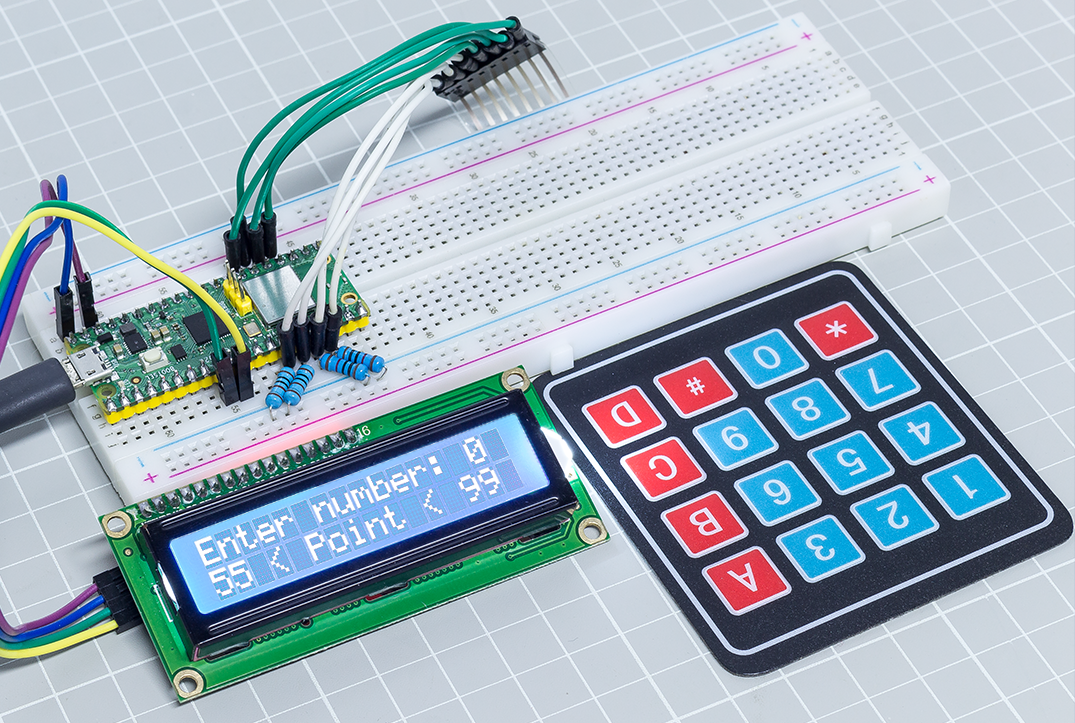
数字当ては楽しいパーティーゲームで、友達と一緒に0~99の数字を入力します。各プレイヤーが数字を入力する度に、範囲が狭まり、誰かが正解するとそのプレイヤーは敗北し、罰を受けます。
例えば、運の良い数字が51で、プレイヤーはそれを見ることができない場合、プレイヤー1が50を入力すると、プロンプトは50 - 99に変わります。プレイヤー2が70を入力すると、範囲は50 - 70に変わります。プレイヤー3が51を入力した場合、そのプレイヤーは不運です。このケースでは、数字はキーパッドを通じて入力され、結果はLCDスクリーンに表示されます。
必要なコンポーネント
このプロジェクトでは、以下のコンポーネントが必要です。
一式を購入する方が便利です、リンクはこちら:
名前 |
このキットに含まれるアイテム |
リンク |
|---|---|---|
ケプラーキット |
450+ |
以下のリンクから個別にも購入できます。
SN |
コンポーネント |
数量 |
リンク |
|---|---|---|---|
1 |
1 |
||
2 |
マイクロUSBケーブル |
1 |
|
3 |
1 |
||
4 |
数本 |
||
5 |
4(10KΩ) |
||
6 |
1 |
||
7 |
1 |
回路図
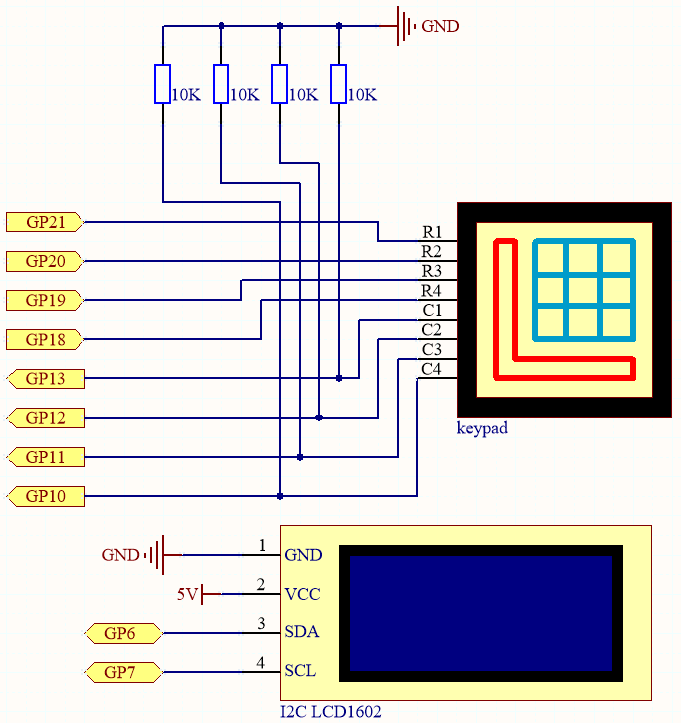
この回路は、 4.2 4x4キーパッド を基にしており、押されたキーを表示するためのI2C LCD1602が追加されています。
配線
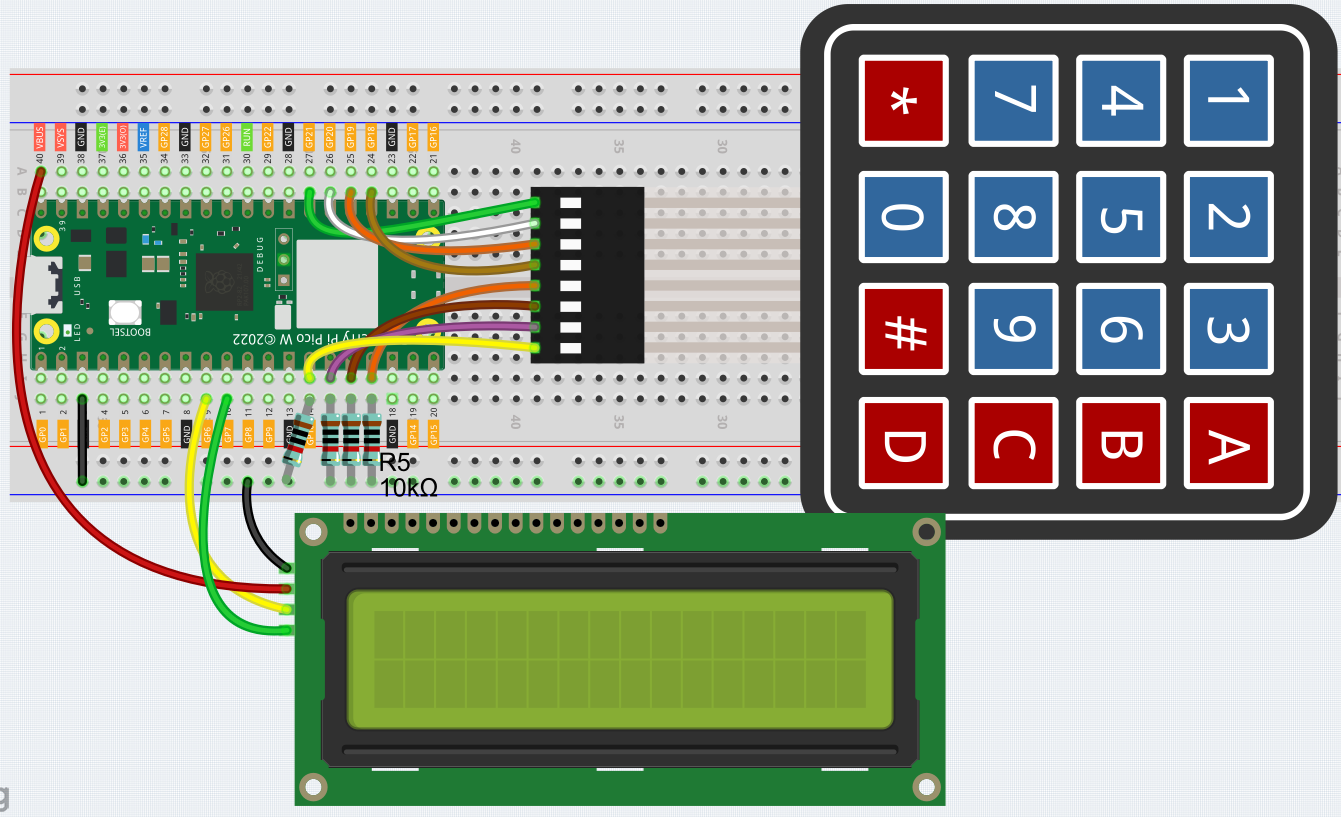
配線を簡単にするために、上記の図では、マトリックスキーボードの列行と10Kの抵抗器が同時にG10~G13の穴に挿入されています。
コード
注釈
kepler-kit-main/micropythonのパスの下にある7.7_game_guess_number.pyファイルを開くか、このコードをThonnyにコピーしてから「Run Current Script」をクリックするか、単純にF5キーを押して実行します。右下隅の「MicroPython(Raspberry Pi Pico)」インタープリタをクリックするのを忘れないでください。
詳細なチュートリアルは、 コードを直接開いて実行する を参照してください。
from lcd1602 import LCD
from machine import I2C, Pin
import time
import urandom

# Initialize I2C communication for the LCD1602 display
i2c = I2C(1, sda=Pin(6), scl=Pin(7), freq=400000)

# Create an LCD object for controlling the LCD1602 display
lcd = LCD(i2c)

# Keypad character mapping for a 4x4 matrix keypad
characters = [["1", "2", "3", "A"],
            ["4", "5", "6", "B"],
            ["7", "8", "9", "C"],
            ["*", "0", "#", "D"]]

# Define row pins for the keypad
pin = [21, 20, 19, 18]
row = []
for i in range(4):
    row.append(None)
    row[i] = machine.Pin(pin[i], machine.Pin.OUT)  # Set row pins as output

# Define column pins for the keypad
pin = [13, 12, 11, 10]
col = []
for i in range(4):
    col.append(None)
    col[i] = machine.Pin(pin[i], machine.Pin.IN)  # Set column pins as input

# Function to read a key from the keypad
def readKey():
    key = []
    for i in range(4):
        row[i].high()  # Set the row pin high
        for j in range(4):
            if col[j].value() == 1:  # Check if any column is pressed
                key.append(characters[i][j])  # Record the corresponding key
        row[i].low()  # Set the row pin low
    if key == []:
        return None  # Return None if no key is pressed
    else:
        return key  # Return the pressed key

# Initialize and reset the game variables (random pointValue, upper/lower limits)
def init_new_value():
    global pointValue, upper, count, lower
    pointValue = int(urandom.uniform(0, 99))  # Generate a random number between 0 and 99
    print(pointValue)  # Print the target number (for debugging)
    upper = 99  # Set initial upper bound
    lower = 0  # Set initial lower bound
    count = 0  # Reset the player's guess count
    return False  # Indicate that the game has not ended

# Function to display the game information on the LCD
# If the player has guessed correctly, show "GAME OVER"
# Otherwise, show the current guess and range
def lcd_show(result):
    lcd.clear()  # Clear the LCD display
    if result == True:  # If the player guessed correctly
        string = "GAME OVER!\n"
        string += "Point is " + str(pointValue)  # Display the correct number
    else:
        string = "Enter number: " + str(count) + "\n"  # Show the player's current guess
        string += str(lower) + " < Point < " + str(upper)  # Show the range of possible values
    lcd.message(string)  # Send the string to the LCD
    return

# Process the player's guess and update the upper or lower bound
# If the guess matches the pointValue, return True to indicate the game is over
# Otherwise, update the bounds and return False
def number_processing():
    global upper, count, lower
    if count > pointValue:
        if count < upper:
            upper = count  # Update the upper bound if the guess is too high
    elif count < pointValue:
        if count > lower:
            lower = count  # Update the lower bound if the guess is too low
    elif count == pointValue:
        return True  # Return True if the guess matches the pointValue
    count = 0  # Reset the guess count for the next attempt
    return False

## Main game setup and loop
# Display a welcome message and prompt the user to press 'A' to start
string = "Press A to Start!"
lcd.message(string)
result = init_new_value()  # Initialize game variables

# Main loop to handle keypad input and update the display
last_key = None
while True:
    current_key = readKey()  # Read the current key pressed
    if current_key == last_key:
        continue  # Skip processing if the same key is still pressed
    last_key = current_key  # Update the last pressed key

    if current_key != None:
        # If 'A' is pressed, restart the game with a new target number
        if current_key == ["A"]:
            result = init_new_value()
        # If 'D' is pressed, check if the current guess is correct
        elif current_key == ["D"]:
            result = number_processing()
        # If a number is pressed and the count is less than 10 digits
        elif current_key[0] in list("1234567890") and count < 10:
            count = count * 10 + int(current_key[0])  # Add the digit to the current guess
        lcd_show(result)  # Update the LCD with the current game state
    time.sleep(0.1)  # Small delay for key debounce
コードが実行された後、
Aを押してゲームを開始します。ランダムな数字pointが生成されますが、LCDには表示されません。あなたがするべきことは、その数字を推測することです。最終計算が終わるまで、最初の行の末尾に入力した数字が表示されます(比較を開始するには
Dを押します)。pointの数字の範囲が2行目に表示されます。範囲内の数字を入力する必要があります。数字を入力すると、範囲が狭まります。もし幸運な数字(または不運な数字)を当てた場合は、
GAME OVER!が表示されます。
注釈
コードと配線が問題ないが、LCDがまだ内容を表示しない場合は、裏側のポテンショメータを回してコントラストを上げることができます。