Note
Hello, welcome to the SunFounder Raspberry Pi & Arduino & ESP32 Enthusiasts Community on Facebook! Dive deeper into Raspberry Pi, Arduino, and ESP32 with fellow enthusiasts.
Why Join?
Expert Support: Solve post-sale issues and technical challenges with help from our community and team.
Learn & Share: Exchange tips and tutorials to enhance your skills.
Exclusive Previews: Get early access to new product announcements and sneak peeks.
Special Discounts: Enjoy exclusive discounts on our newest products.
Festive Promotions and Giveaways: Take part in giveaways and holiday promotions.
👉 Ready to explore and create with us? Click [here] and join today!
Install Arduino IDE and Add Libraries
The Arduino IDE, known as Arduino Integrated Development Environment, provides all the software support needed to complete an Arduino project. It is a programming software specifically designed for Arduino, provided by the Arduino team, that allows us to write programs and upload them to the Arduino board. The Arduino IDE 2.0 is an open-source project. It is a big step from its sturdy predecessor, Arduino IDE 1.x, and comes with revamped UI, improved board & library manager, debugger, auto complete feature and much more. In this tutorial, we will show how to download and install the Arduino IDE 2.0 on your Windows, Mac, or Linux computer.
Download Arduino IDE
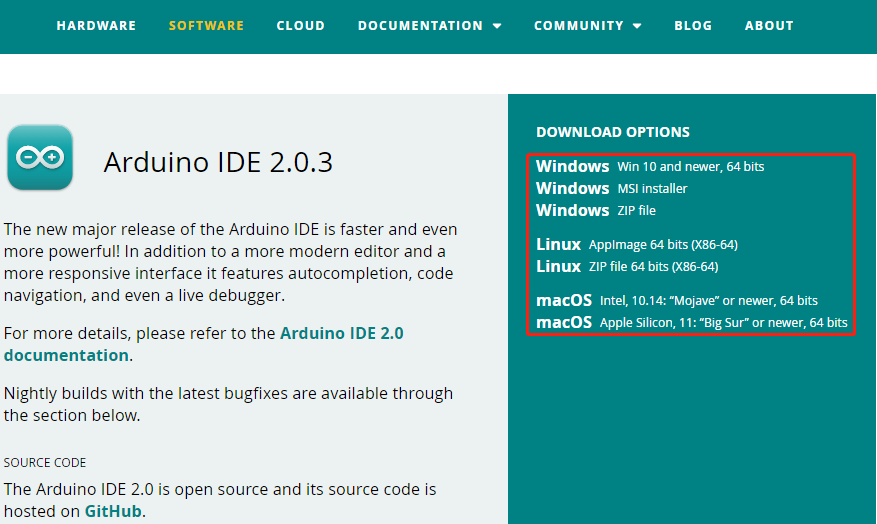
The code in this kit is written based on Arduino, so you need to install the IDE first. Skip it if you have done this. Now go to the Arduino website: https://www.arduino.cc/en/software, find the one that suits your operation system and click to download.
Installation
Windows - Win 10 and newer, 64 bits
Linux - 64 bits
Mac OS X - Version 10.14: “Mojave” or newer, 64 bits
Windows
Double click the
arduino-ide_xxxx.exefile to run the downloaded file. Read the License Agreement and agree it.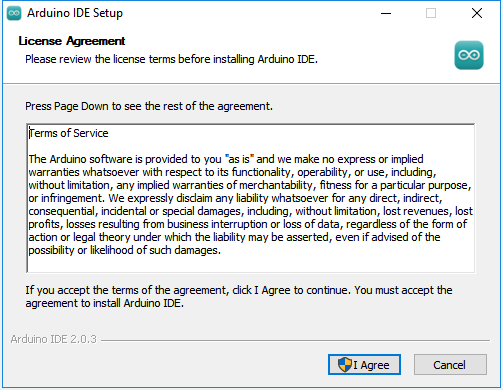
Choose installation options.
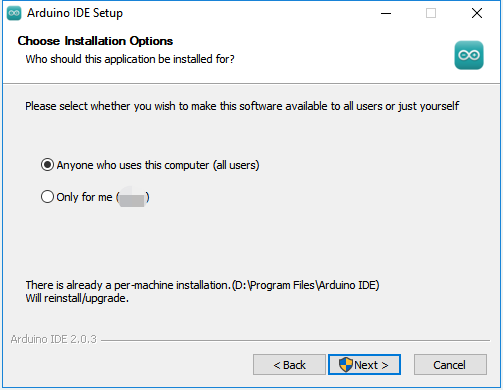
Choose install location. It is recommended that the software be installed on a drive other than the system drive.
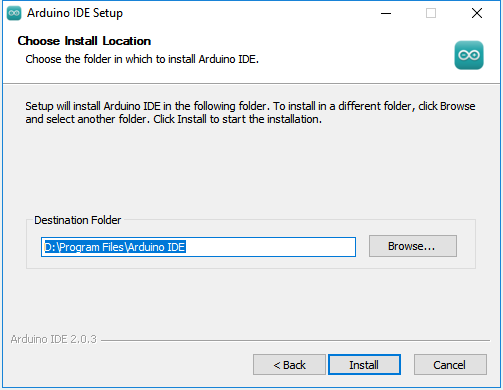
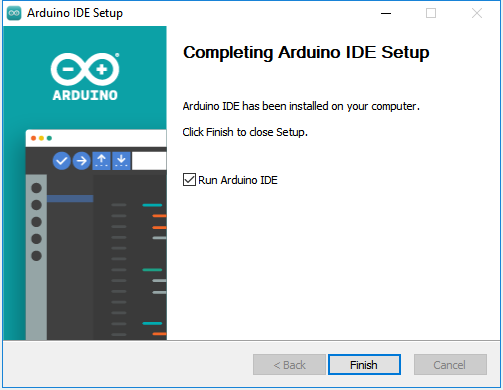
Then Finish.
Mac OS X
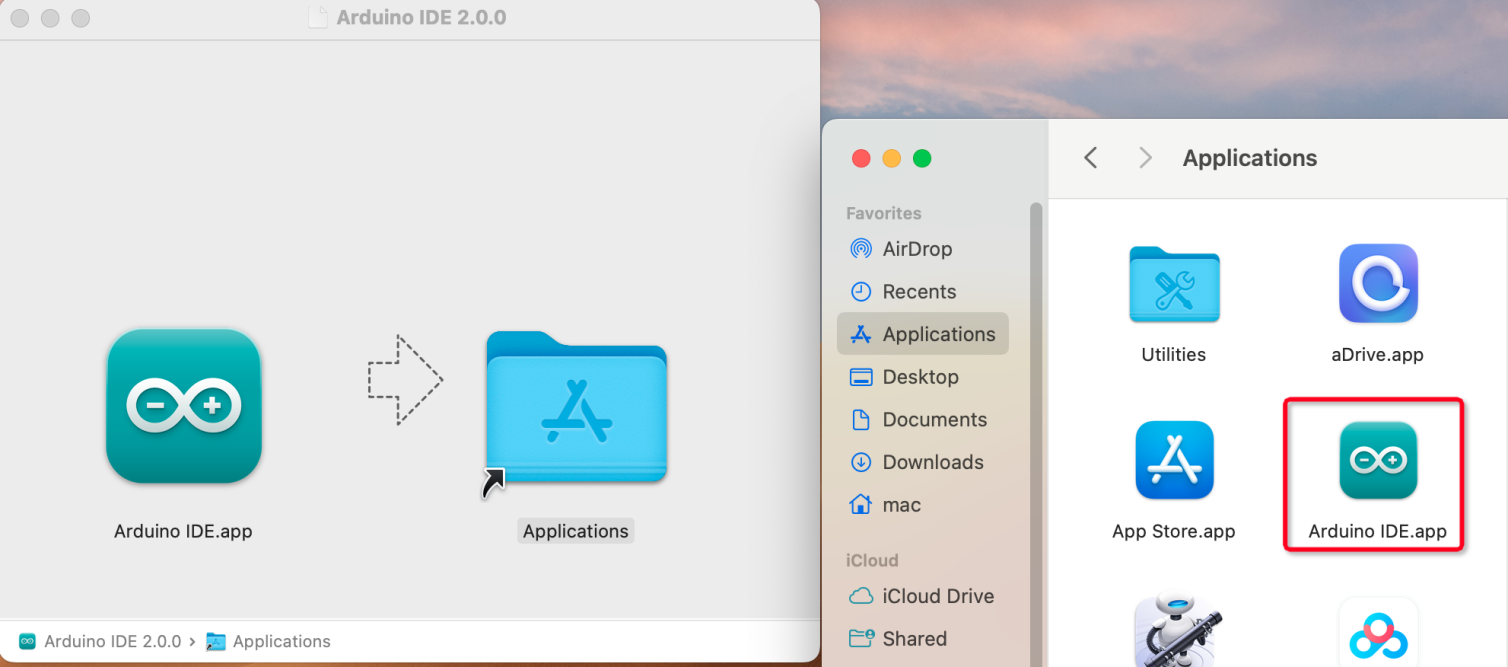
Double click on the downloaded arduino_ide_xxxx.dmg file and follow the instructions to copy the Arduino IDE.app to the Applications folder, you will see the Arduino IDE installed successfully after a few seconds.
Linux
For the tutorial on installing the Arduino IDE 2.0 on a Linux system, please refer to: https://docs.arduino.cc/software/ide-v2/tutorials/getting-started/ide-v2-downloading-and-installing#linux
Open the IDE
When you first open Arduino IDE 2.0, it automatically installs the Arduino AVR Boards, built-in libraries, and other required files.
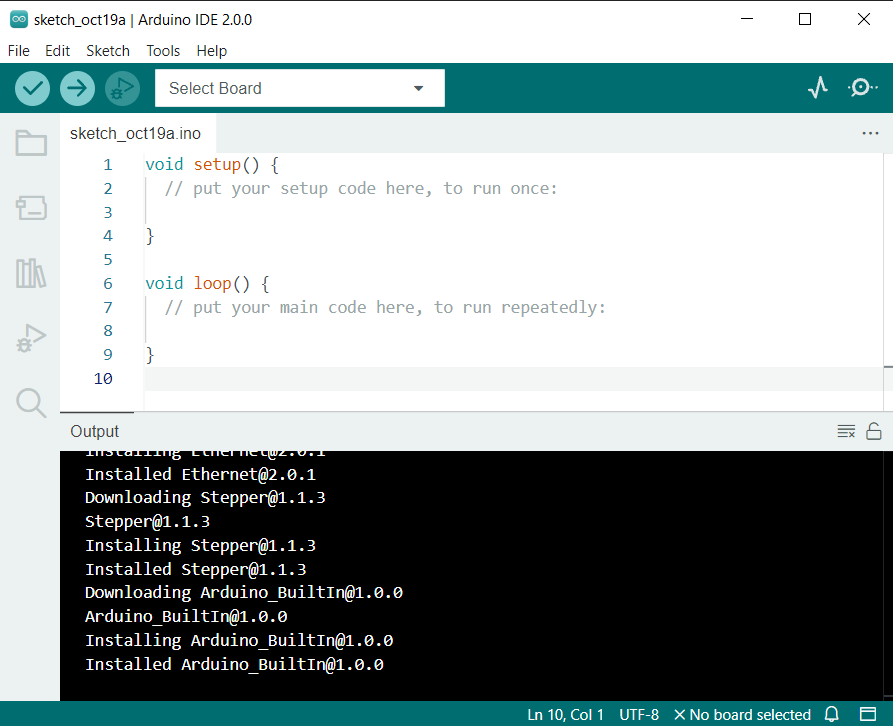
In addition, your firewall or security center may pop up a few times asking you if you want to install some device driver. Please install all of them.
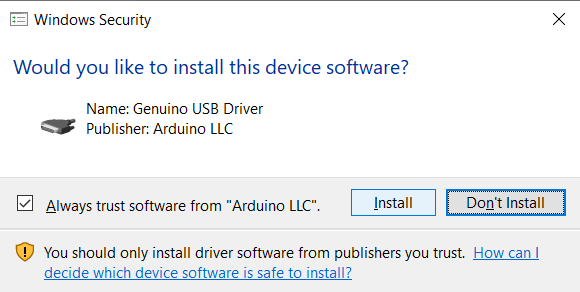
Now your Arduino IDE is ready!
Note
In the event that some installations didn’t work due to network issues or other reasons, you can reopen the Arduino IDE and it will finish the rest of the installation.
Add Libraries
You will get the following error when trying to run the code that contains the ultrasonic module:
NewPing.h: no such file or directory
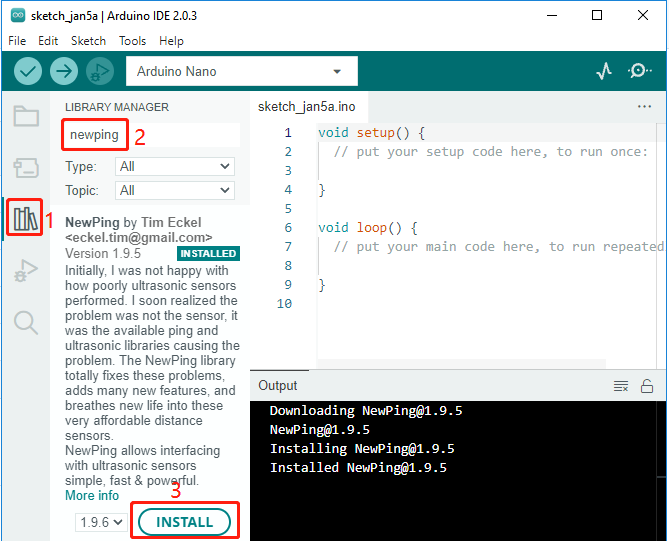
Therefore, it needs to be manually added. Here are the steps.
Open the Arduino IDE, click on the Library Manager icon to open it, search for newping and click on INSTALL in the options that appear. Wait for the prompt to complete the installation and you’re done!